


Using Waterproof Tarpaulins to Protect Machinery and Equipment
- Bradley Tomlinson

- Jan 22
- 3 min read
Machines and tools are helpful in many applications and locations, like farms, factories, workshops, and construction sites. They enhance and improve productivity. Machines need care, however. When machines get wet, dusty, or rusty, it negatively affects their performance. Repairs cost time and money. To limit this, people cover their machines with waterproof tarpaulins. Tarpaulin covers are simple and cheap, but they do heavy lifting.
What Are Waterproof Tarpaulins?
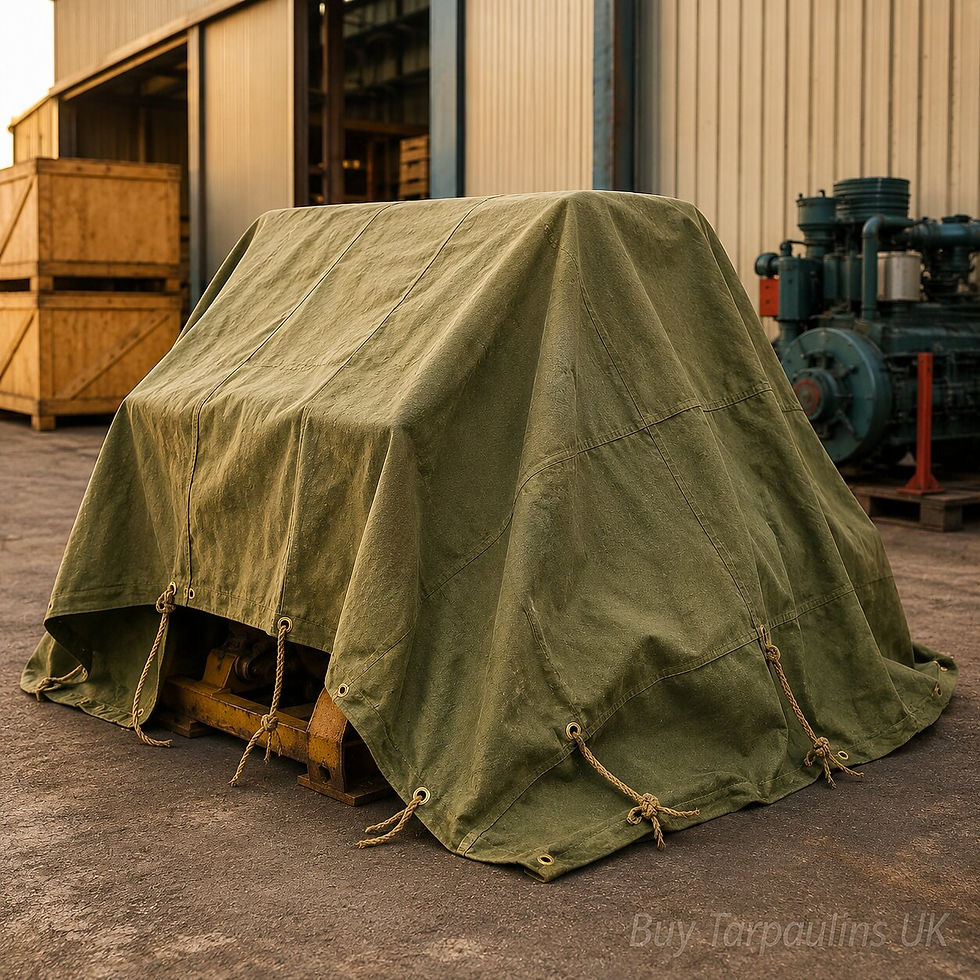
Waterproof tarpaulins, or tarps, are a reliable and durable sheet made from fabric or plastic, PVC, or another synthetic material. Tarps do not allow water to penetrate them, and they also block sunlight, dust, and wind. They come in various sizes; some are small enough to cover tools while others are large enough to cover an entire machine, such as a tractor or generator (like the one shown).
Why Are They Important?
Over time, machines can become damaged by rain, snow, sunlight, and dust. For example, when water gets onto a metal part, it can start to rust. If the water goes into electrical wires and motors, they won't be able to work. Strong sun rays can even fade the paint and crack some parts. If dust and dirt get inside the moving parts of a machine, that can lead to breakdowns and stoppages.
The waterproof tarp provides coverage against all of these threats to equipment. The tarp acts like a shield. If the machine is properly covered, then water can't touch the machine, sunlight can't overly heat the machine, and dust and dirt are kept out. If any of these unwanted elements stay out, then the machine is safe and ready to use.
How Tarpaulins Help in Daily Use
It is simple to cover machines with a Heavy Duty Tarpaulin. First, make sure the machine is clean and dry, then completely cover the machine with your tarp. There should not be any portion of the machine exposed. Do not forget to tie it down, either with ropes or hooks, so that the tarp does not blow off in the wind. It is recommended to create a slight slope at the top of your tarp as well, so water does not settle on top. If water collects on the tarp, it can cause the tarp to sag or create leaks over time.
Now and then, it is important to lift the tarp. This allows air passage and prevents moisture accumulation inside. If your machine is covered for an extended period, it can develop moisture accumulations and possibly be damaged without any air movement.

Use in Different Places
Canvas Tarpaulin covers are used on job sites to cover cement mixers, drills, and other equipment that will not be used until the next day. On farms, tarps are used to cover tractors and harvesters when rain or sun will cause damage. In factories, machines are covered when they are broken or need to be unused for a certain period of time. In garages and small private workshops, workers cover tools at the end of the day to prevent dust or other debris from collecting on the equipment.
Benefits of Using Tarps
Utilizing waterproof tarps is a cost saver because machines have to be repaired less. This is also a time saver because machines that are repaired less often can be in use more often. Clean, dry equipment is safer for workers. Proper covering can prolong the function or service life of machines.
Common Mistakes to Avoid
Some will use old, torn tarps that can still let rain in, and sometimes will leave the machine covered when it is still hot from use, creating moisture in an enclosed space. Some poorly fasten their tarp or simply do not fasten it at all, and then it blows away in the wind. Some forget to unzip when they have not checked on the machine for days, meaning moisture has been trapped, and this is going to cause damage to the machine.
Conclusion
Waterproof tarps are an easy, clever way to maintain machines and equipment. They will protect from rain, sun, wind, and dust. When used properly, waterproof tarps can keep machines clean, covered, and ready to work. This will minimize damage, save money, and provide easy access to machines daily. In the field or factory, or shop, a tarp is, in this author's opinion, one of the best, simplest devices to protect one's valued asset.


Comments